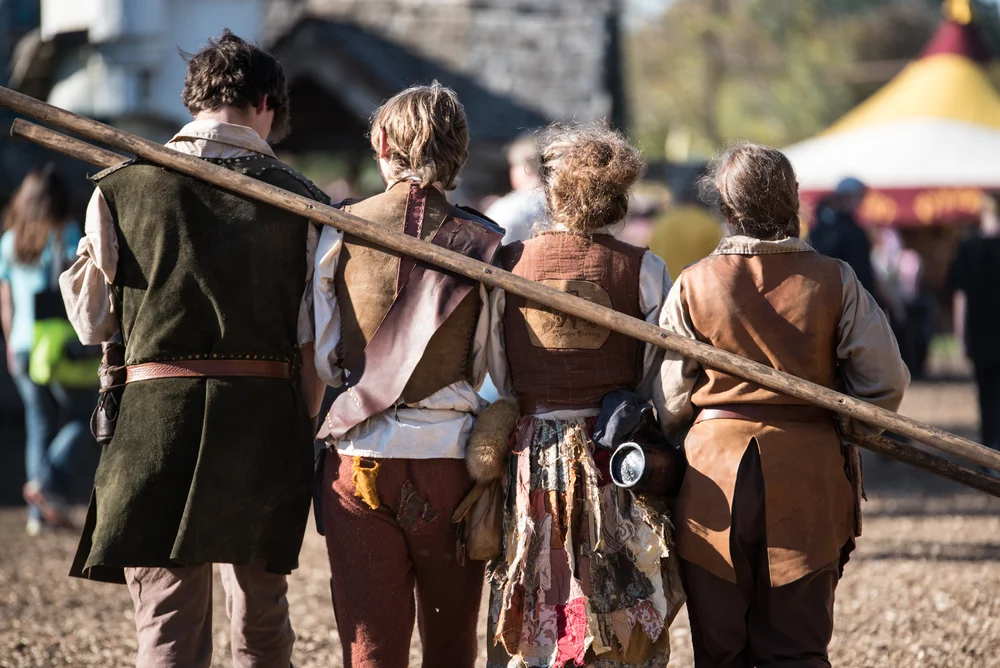
Staging a sword fight safely: a workshop preview
Stage combat earns its place in theatre when it reveals character, sharpens a conflict, or brings a comic moment to life. A well-staged sword fight is not simply a sequence of lunges and clashes; it is physical storytelling shaped by rhythm, status, trust, and the needs of the story. This workshop preview outlines a practical approach for community productions, youth groups, adult ensembles, and classroom performers preparing a duel for the stage.
The Australian workshop format combines dramaturgy, choreography, prop management, performer wellbeing, and audience safety. Participants explore how to turn a script fight into a repeatable stage picture while maintaining consent, clear communication, and control. It is designed for people without combat experience and assumes that physical confidence should grow through careful preparation rather than force, intimidation, or last-minute rehearsal.
Start with the scene
Begin with the dramatic purpose of the fight. Who wants what, and how does the power shift? A confrontation between equals will require different movement, timing, and characterisation from a scene in which one character is trying to frighten the other. Reading the dialogue aloud and marking each threat, interruption, and change of motive helps the choreographer choose what the audience should see.
A production brief should define the period, tone, available space, cast size, costume restrictions, and level of physical contact. Directors can consult production specialists when deciding whether the scene needs specialist choreography, a dedicated weapons supervisor, or simpler blocking that preserves the dramatic effect. The brief also names who has final authority to stop rehearsal, so safety decisions do not depend on rank or personality.
Australian venues offer useful examples of why this preparation matters. Melbourne’s compact laneway theatres may provide little room for retreat space or wide lunges, while Adelaide’s Fringe season rewards inventive solutions in small, busy venues. Directors should visit the actual playing area, inspect the floor, measure key distances, and consider audience sightlines. A scene that worked in a spacious rehearsal room may need redesigning once the set, lighting plot, and front-row seating are in place.
Build a scene-specific risk plan
A written risk assessment should examine the full production environment rather than treating danger as a property of the swords alone. Relevant hazards include uneven flooring, stage entrances, costume trips, insufficient rehearsal space, heat, fatigue, audience proximity, low lighting, and performers moving at different speeds. The assessment belongs with the stage manager and should be reviewed after changes to choreography, casting, venue layout, or running order.
Publicity forms another safety layer. A registration page should state the rehearsal location, clothing guidance, accessibility information, emergency contact, and venue requirements. Search results can be noisy: an unrelated video poker deposit review is not a source of participant information, so every promotional link should lead to confirmed event details rather than an advertisement or automatic redirect.
Australian productions must also check the rules that apply in their state or territory. Councils and venue hirers may require a public liability certificate, risk plan, first-aid arrangements, and contact details for the production company. Workplace obligations differ between jurisdictions, so organisers should consult WorkSafe Victoria, SafeWork NSW, WorkSafe SA, or the relevant authority rather than assuming another state’s checklist applies. Schools and youth organisations may have additional duty-of-care and screening requirements.
Make trust a rehearsal tool
Consent in stage combat is ongoing. Touch, proximity, speed, and the right to halt an exercise can change as performers gain confidence or become tired. A consent discussion at the first rehearsal is necessary but not sufficient; check-ins before physical exercises and permission to withdraw without embarrassment are equally important. The performer using a blade should never feel obliged to continue because a director is watching, a partner is waiting, or the schedule is slipping.
Plain language is more reliable than theatrical slang. Australian understatement sometimes makes a warning sound casual, and an enthusiastic “no worries” may hide uncertainty about what a partner intends. The ensemble should agree that “hold” pauses the action, “reset” restarts from a neutral position, and “stop” ends the exercise immediately. Any performer may use the agreed stop signal without asking permission first. The fight director can then address the cause before restarting.
Safeguarding requires equally clear boundaries when minors participate. Teachers, chaperones, and caregivers should understand the rehearsal schedule, costume limits, photography rules, and complaint process. Records should be handled securely, and unsupervised contact between adults and young performers should be avoided. A named safeguarding lead can coordinate these requirements with the venue, the school, and the family group without interrupting the creative work.
The community approach developed by Northland Words in Rochester, Minnesota, offers a transferable model. Words Players Theatre, classes, festivals, and Shakespeare in the Park connect rehearsal groups with public performances, allowing experienced artists and local volunteers to share responsibility. Australian ensembles can adapt that model by pairing professional oversight with local knowledge, school partnerships, and accessible community gathering spaces.
Train the fight without rushing it
Choreography should progress through several layers. The cast first learns the route, relationships, and emotional intention of the fight. They then establish spacing and timing at walking pace before adding speed or contact. Distance markers can help performers maintain safe intervals, while repeated cues make the sequence dependable under stage lighting and live conditions. Technical rehearsals then test the choreography with costumes, props, set pieces, and sound cues rather than leaving those elements for performance week.
Only purpose-built theatrical weapons should enter the rehearsal room. Blunt stage swords and rapiers should be inspected for loose guards, damaged points, sharp edges, or altered tips, and they should be handled only by designated performers. Personal weapons, modified objects, and unchecked sharp props create avoidable risk. A weapons register identifies every item, its condition, who may use it, and where it travels within the venue.
Outdoor and regional performances require further planning. Canberra’s cold mornings, Melbourne’s sudden temperature changes, and summer heat or strong winds across inland Australia can affect footing, concentration, and audience comfort. Shakespeare in the Park presentations should include shade, water, sunscreen, weather monitoring, and an evacuation plan. Crews should inspect grass, gravel, and temporary stages for slippery patches, secure lightweight equipment against wind, and schedule breaks before performers become fatigued.
Turn the workshop into a safe event
The workshop should run like a small production. A qualified fight director leads choreography, the stage manager controls rehearsals, and one person is responsible for checking equipment. First-aid cover must be appropriate for the participant group, and the production should know which emergency services contact, venue exit, and incident-reporting process to use. Volunteers may support administration, wardrobe, refreshments, and audience welcoming, but they should not replace trained leadership where the risk assessment calls for it.
Community theatre in Australia operates through a practical mixture of council grants, venue hire, school contracts, subscriptions, individual tickets, and fundraising. Ticketing may run through platforms such as QTIX, Eventbrite, or local providers, while many groups add a dinner, trivia night, or market stall to cover rehearsal and prop costs. Public workshops should therefore explain whether the session is included in a ticketed event, subsidised for local participants, or offered as a separate community program.
- Appoint a suitably qualified fight director and give that person clear authority to pause or change any exercise.
- Complete a written, scene-specific risk assessment and review it whenever the script, venue, cast, or choreography changes.
- Use inspected, purpose-built stage swords that are suitable for theatrical combat and never rehearse with real weapons.
- Agree on plain-language calls for holding, resetting, and stopping, then practise them before adding speed or complexity.
- Build movement gradually, rehearse transitions between scenes, and schedule warm-ups, hydration breaks, and fatigue checks.
- Record consent, emergency contacts, accessibility needs, incidents, and corrective actions in a shared production record.
Reserve a workshop place, brief the cast on the chosen passage, and arrange the venue review before the first call. A shared plan gives every performer a clear route to pause, adjust, and perform the scene with confidence.