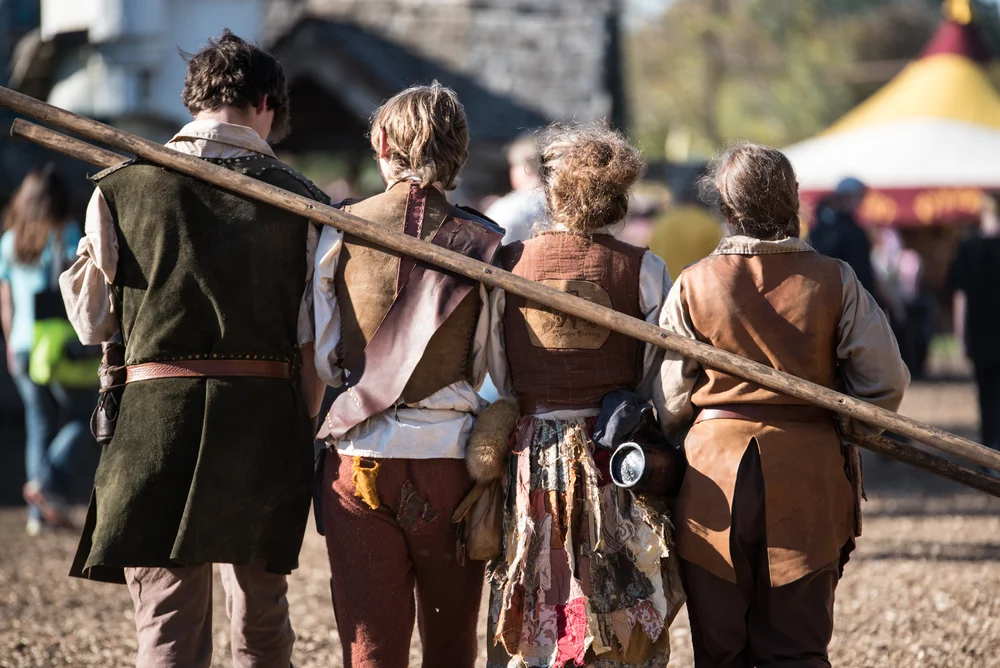
Shakespeare in the park: Rochester’s open-air tradition
Rochester, Minnesota, carries the brisk identity of a Midwestern medical and educational centre. The Mayo Clinic anchors much of its professional life, while the Root River and its park system give the city a softer edge. Against that background, Shakespeare in the Park is a clear expression of what Rochester does well: turning an ordinary summer evening into a shared cultural occasion without requiring a theatre ticket.
Every July and August, actors take Shakespeare out of the darkened auditorium and into public grass. The pages that can seem remote in a classroom become audible in the open air, where the audience sits on blankets, folding chairs and park benches. For Australian visitors, the ritual will feel partly familiar, but the timing carries a useful difference: Minnesota’s summer falls during Australia’s winter, and the long daylight changes the shape of an evening at the park.
The history of Shakespeare in the Park in Rochester reaches back to the mid-1990s, when local theatre workers staged their first outdoor season. That early work grew from the activities of what became Words Players Theatre and The Shakespeare Company, two groups with roots in theatre, improvisation and Shakespeare. The 2008 merger brought these activities together under a 501(c)(3) nonprofit. The series is now presented by Northland Words, alongside classes, literary events and community gatherings.
Rochester’s story reaches beyond famous plays performed outdoors. It is a story about how a small city makes theatre part of ordinary life: a volunteer greeting families at the gate, a student learning to speak verse, an older resident following a familiar comedy, and a musician joining a festival under the trees. Those details explain why the park series has endured while the city’s cultural life around it has continued to broaden.
A summer tradition takes root
Rochester’s Shakespeare in the Park began in 1996, when actors took Shakespeare out of the indoor stage and into public parks. The early format was deliberately straightforward: a temporary stage, a local company and a public space. It could reach people who did not normally buy theatre tickets, while Shakespeare offered a familiar body of work capable of drawing both experienced actors and curious newcomers.
Over time, the summer programme broadened into a series of plays with stronger partnerships between actors, musicians, teachers and volunteers. Free admission became a defining feature, allowing the productions to function as both theatre and civic gathering. The result was a distinctly Rochester institution, with its own pace and personality rather than a miniature imitation of a major Shakespeare festival.
The 2008 merger that formed Northland Words gave this developing tradition a stable institutional home. Words Players Theatre brought its experience of devised and improvisational performance, while The Shakespeare Company brought a sustained commitment to Shakespeare. Together they could support park productions, youth and adult classes, and the annual Thornton Wilder Short Play Festival. The merger did not erase the series’ origins; it widened the community able to take part in it.
Life on Rochester’s outdoor stages
The choice of venue matters. Productions have appeared in settings such as Mayo Park and Riverside Park, as well as neighbourhood greens, and the setting changes with each season. A park cannot provide the walls, acoustics and controlled lighting of a proscenium theatre, so designers often rely on simple staging, careful spacing and the clarity of the actors. That openness makes a civic gathering as well as a theatrical one.
Much of the pleasure lies in the small rituals surrounding the performance. People spread a picnic rug, carry a refillable bottle and decide whether to arrive early enough for a good view. Australian theatre-goers often bring the same practical habits to open-air events in Sydney or Melbourne. Rochester adds a different rhythm: mosquito repellent and a light layer can matter near the river, a sudden storm may interrupt a scene, and the midsummer sun can be more intense than visitors expect.
Within the season, the programme has moved between comedy, tragedy, history and romance, giving regular audiences familiar landmarks and newcomers an invitation to test the stakes. Shakespeare becomes more accessible when the plays meet people as living stories rather than examination papers. Their plots can be human, comic or outrageous, but the language makes even a difficult scene feel immediate. When the set is modest, performance carries the evening: a pause, a raised voice or a well-timed silence can hold an audience on the same patch of grass.
Shakespeare as a learning experience
An outdoor stage is also a classroom. Performers must make meaning clear without relying on the visual polish of a conventional theatre. Directors often work closely with actors on projection, pace and physical storytelling, because the open air offers little visual cover. For students, the experience of speaking verse can turn a line studied on a page into a challenge of breath, timing and partnership.
That challenge is why the park programme has remained connected to Northland Words’ education work. Young people can encounter Shakespeare in a setting that feels less formal than a school auditorium, and adults can return to the plays without treating them as academic objects. Workshops and classes build skills in voice, movement, text and ensemble work, offering routes into performance for people who may not see themselves as actors when they first walk through the door.
The annual Thornton Wilder Short Play Festival adds a distinct literary counterpoint to the longer Shakespeare productions. Wilder’s compact plays explore ordinary lives with quick humour and startling precision, and they can welcome audiences who prefer a sharper, shorter encounter. Their themes also suit a festival atmosphere, where several small works create variety across an afternoon or evening. As with other protected plays, Wilder’s work still requires the relevant permissions, giving the festival a practical connection to the wider business of producing theatre.
The people who make the season happen
Behind the visible company is a substantial web of contribution. Directors work with actors; designers create simple costumes and scenery; technicians build and strike the temporary stage; volunteers welcome spectators and help the site run safely. Words Players Theatre also provides a continuing base for experimentation and collaboration. Professional standards and community participation coexist here; a community can sustain high standards of care without making every production a large commercial venture.
For visitors from Melbourne or Sydney, the scale can be striking. Those cities offer numerous established companies, large venues and festivals with paid technical departments. Rochester has a smaller cultural market, where community arts funding, donors, volunteers and local businesses often support the same seasonal programme. A park performance therefore depends on relationships that commercial theatre does not always need to cultivate, including the willingness of neighbours to give an evening or a weekend.
These relationships create unusually broad ways to participate. A teenager can test an interest in acting, an adult can work backstage, a musician can join a celebration of the season, and an audience member can help by carrying chairs or giving an hour as an usher. Many people first come to Northland Words for Shakespeare and later return for a class, a short play or a festival. The park stage becomes a familiar doorway rather than a rare spectacle.
A civic meeting place across generations
Rochester’s identity as a healthcare and learning hub often brings people to the city from elsewhere, but the park series helps those temporary residents encounter it as a community. Shared performances can connect long-time residents with newcomers, families with students and audiences with performers in a way that a formal subscription season may not. The importance lies in repeated participation: the same park and the same hour of the evening can hold different memories over the years.
There are practical lessons for Australian arts organisations in that civic role. Local government support, philanthropy, volunteer labour and accessible admission can strengthen a programme without turning it into an exclusive event. Australian charities operate under their own framework: registration with the Australian Charities and Not-for-profits Commission brings record-keeping and annual reporting duties, while incorporated associations answer to state or territory legislation. Australian outdoor events face parallel requirements: public liability cover, site approval, risk planning and, where children are involved, the relevant state or territory Working with Children Check.
The wider cultural calendar contains many gatherings with comparable power to create belonging. The online presence of FAFS WAG Ball illustrates how a single occasion can become part of a community’s social story. Shakespeare in the Park holds a distinctive place in Rochester’s cultural life because it combines entertainment with public space, and because its annual return gives residents something stable to anticipate.
Join the next season
A first visit begins with the season calendar. Choose a park, read the play details and arrive early enough to settle in before the actors take the stage. Bring a blanket or light chair, refillable water and a layer suited to Minnesota weather. Visitors from Australia should remember that July and August are winter at home, while the Rochester programme runs during the local summer; check accessibility information and transport plans as part of the same preparation.
Participation can go further than watching. Northland Words welcomes interest from people who want to act, design, build scenery, usher, play music, teach, volunteer or support the organisation financially. Experience is helpful in some roles and unnecessary in others, and the first task can be as simple as helping with a set change. The organisation’s mix of theatre, literature and music offers several ways in, even for visitors whose original plan was only to see a Shakespeare play in the park.
Plan a visit to Rochester’s parks, watch a performance beneath the open sky and consider giving the series an evening of your time. A full stage does not need a grand building when a community is ready to listen. Bring a chair, share the grass and help keep the words alive for another generation.