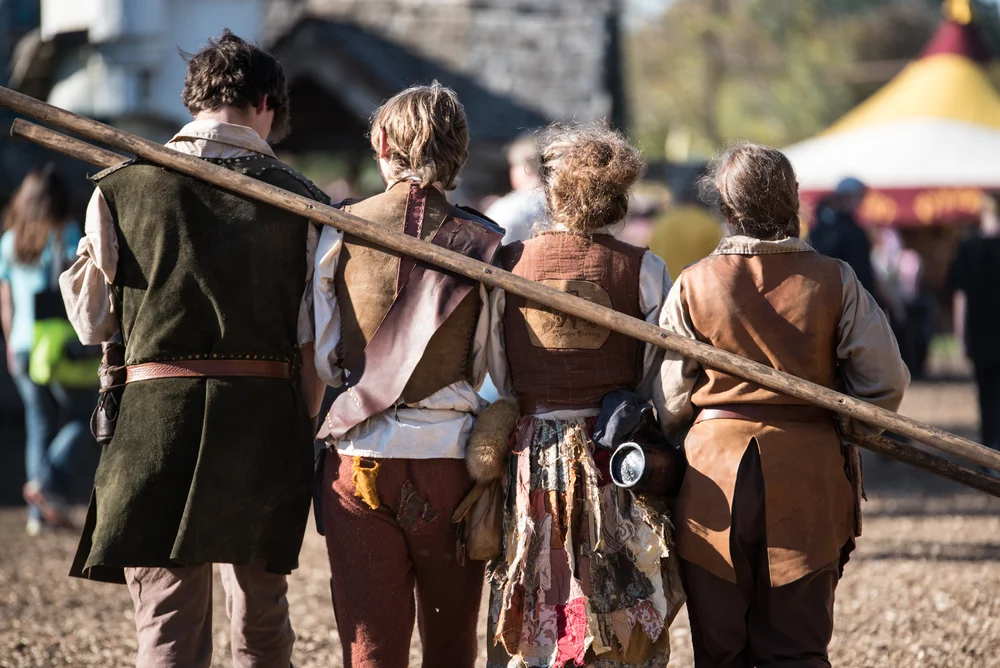
The joy of Shakespeare beneath an open sky
Shakespeare’s plots were never meant for a sealed room alone. Performed beyond a proscenium, the metre feels alive, the jokes land differently, and actors exchange energy with people who have just walked from a bus stop, school run or market stall. The joy of performing Shakespeare outdoors lies in that immediacy: a speech can travel across a lawn, a duel can borrow the horizon, and an audience can become part of the imagined world.
For Australian audiences, an open-air play can fit naturally into familiar public life. Picnic rugs, folding chairs, cold drinks and wide-brimmed hats appear beside a portable stage in parks from Melbourne’s inner suburbs to Sydney’s western suburbs. A neighbourhood production can invite people to stay through golden hour without turning the evening into a costly night out.
A larger stage, a closer circle
An outdoor stage removes the fourth wall without quite removing it. The marked playing area still guides the action, yet trees, paths and surrounding buildings become part of the visual language. A balcony in Macbeth may be a flightcase, while the forest in A Midsummer Night’s Dream can be a cluster of gum trees casting moving shadows.
The distance between performers and spectators also changes. In a theatre, an audience sits in darkness; on a lawn, faces remain visible in daylight. Actors learn to project towards people shifting for a better view, and spectators become gentler collaborators, responding to vocal choices and physical gestures that a darkened auditorium might conceal.
Community companies make this approach especially effective. Northland Words, a 501(c)(3) nonprofit arts organisation in Rochester, Minnesota, brings theatre, literature and music together through its Words Players Theatre, classes, festivals and annual Shakespeare in the Park series. Its model offers a useful lesson: the park becomes a shared cultural room rather than an escape from the theatre.
Weather becomes part of the performance
Australian weather gives outdoor Shakespeare layers of character. A cool breeze can stir a cloak during a storm scene, while sudden rain can interrupt a confession and send the company into cheerful improvisation. Before every performance, experienced actors check the Bureau of Meteorology forecast, secure lightweight scenery and plan for shade, hydration and sudden wind.
Sound behaves differently without walls. Shoes on grass soften footsteps, open air disperses echoes and unexpected noise arrives from traffic, dogs or passing conversation. Rehearsals therefore include call-and-response projections, clear consonant diction and deliberate pauses. These constraints sharpen comic timing and help a quiet soliloquy hold the attention of a broad, moving crowd.
The same unpredictability creates beloved memories. A gust lifts a letter during Romeo and Juliet; a child leaves the picnic rug to retrieve a runaway kite; an actor steps around a sprinkler. Such interruptions are not flaws to eliminate. They reveal the live nerve of the work and create the private joke an audience carries home.
Community casting changes who belongs onstage
Outdoor seasons often welcome performers who may not describe themselves as professional actors. Teachers, students, retirees, shopkeepers, singers and local volunteers can form a company around a set text. A public casting notice placed at libraries, community centres and cafés opens the work to people who might never attend a conventional audition.
Sparser scenery also rewards imaginative stagecraft. When scenery is minimal, performers can draw on visual theatre practice to turn a doorway, bench or length of cloth into a shifting location. Physical choices become clearer because there are few objects to hide behind, allowing newcomers to build confidence through simple, repeatable actions.
Northland Words shows how such participation can serve several generations at once. Young actors gain a stage, experienced mentors share craft, and families encounter classic language in an accessible setting. Shakespeare’s language can sound remote in a classroom, but spoken aloud among neighbours it becomes communal, playable and alive.
Markets, festivals and shared summer rituals
A local market is a natural partner for an open-air performance. In Australian towns and cities, market stalls, food vans, school fairs and twilight events often provide the audience, volunteers and practical infrastructure that community theatre needs. A fundraising bar, book stall or costume display can connect a performance to nearby makers without distracting from the play.
Large gatherings must still be planned closely. Northland Words shares the behind-the-scenes work of organising short play festivals, where multiple works, artists and technical teams share one day. The same discipline transfers neatly to a park programme built around several short scenes, family activities and a local market.
Short formats help newcomers cross the threshold. A five-minute excerpt invites a passer-by to stop, while a family can arrive late without missing the whole evening. Performances placed near tram stops, railway stations and community transport routes also make participation easier for people who do not own a car or want to avoid an unfamiliar venue after dark.
Comedy travels differently under open sky
Shakespeare’s comedies depend on timing, but timing changes when laughter is visible. In an enclosed theatre, the audience hides its reaction until a burst of applause. Outdoors, a smile can travel from the front row across a hundred picnicking families, altering the actor’s next entrance. Performers can adjust to that visible rhythm instead of waiting for a formal cue.
The comic precision of Thornton Wilder offers a revealing comparison. Notes on comic timing in Wilder explore how pauses and delayed reactions deepen humour, a skill that transfers directly to Shakespeare’s tricksters, lovers and overconfident learners. A well-held silence outdoors becomes a collective event, shared by strangers under the same sky.
Physical comedy also gains fresh energy. A mistaken identity can expand across a path; a letter can become urgent as it passes among several characters; a ladder may suggest a tower until the company climbs down in full view. The bare stage lets audiences imagine the world together, and their imagination becomes part of the machinery that makes the jokes work.
Permissions and care for public spaces
A park performance carries responsibilities as well as rewards. Local councils generally require approval for public events, and organisers may need to address insurance, crowd numbers, emergency access, noise, food service, waste and temporary electrical equipment. In a city such as Melbourne or Sydney, those requirements can sit alongside busy paths, nearby residents and strict limits on what may be installed in a public reserve.
Safety plans should reflect Australian conditions. State and territory work health and safety duties, including obligations for risks such as heat stress, sun exposure, manual handling and unsafe structures, apply according to the venue and the people involved. Simple provisions—water, shade, trained first aiders, secure weights and a weather threshold for stopping—protect cast, crew and public.
Copyright also deserves attention. Shakespeare’s original words are in the public domain, so those texts generally attract no performance royalty in Australia. A modern adaptation, translation, musical score or recorded soundtrack may still be protected under the Copyright Act 1968 and require permission. Checking the source and securing rights before announcing a production keeps goodwill intact and the programme lawful.
Take Shakespeare beyond the walls
Start with a modest proposition: a park, a public square, a school courtyard or a riverside lawn; a company of six to twenty; one scene that can be performed in half an hour; and a date near sunset. Approach the local council early, then partner with a library, school, community centre or market organiser to share equipment, volunteers and audience information.
Make the invitation generous. Offer a free daytime workshop, accessible seating, a relaxed atmosphere and clear information about toilets, transport, shade and weather. A small food or book stall can support the company, while nearby cafés can extend the gathering into a neighbourhood evening. Invite people to bring a rug, a neighbour or a first-time reading.
Northland Words demonstrates how an annual Shakespeare in the Park series can become a durable civic ritual rather than a single spectacle. Australian communities can build something similar around their own climate, streets and local voices. Choose the site, cast the company, rehearse with the wind, and let the open sky carry the words into a shared night.