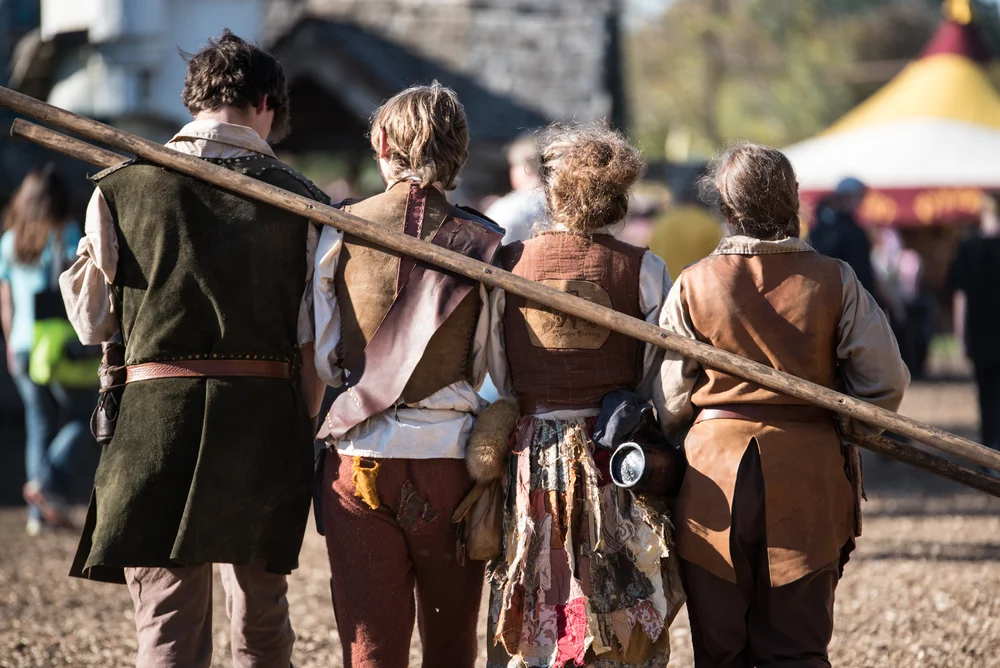
What our audience says about Shakespeare in the Park
Northland Words’ annual Shakespeare in the Park turns a patch of Rochester, Minnesota, into an evening of theatre, music and conversation. Across the season, audience members share a consistent impression: Shakespeare feels lively, approachable and surprisingly close to home when it is staged outdoors.
The feedback tends to focus less on scholarly analysis than on lived experience. People mention the first burst of laughter, a particular piece of music, the shade of the trees or the ease of bringing family along. These details reveal what the series does well: it turns a complex play into a shared social occasion.
For Australian readers, the format will be familiar without feeling identical. Many cities have parklands, civic plazas and festival grounds where theatre unfolds beside markets, food stalls and school-holiday activity. A Melbourne or Sydney crowd may arrive by tram, train, bus or rideshare, settle on a blanket and expect a performance to make the most of a summer evening.
The comments collected around Northland Words’ performances describe exactly that kind of exchange. They also show that an open-air stage asks more of its audience, actors and crew than a conventional auditorium. The strongest responses connect great theatre with thoughtful comfort, clear communication and a genuine sense of community.
A park performance changes the rules
Shakespeare in the Park is rarely described as a quiet night at the theatre. Audiences talk about arriving early, finding a seat and watching the light change before the first line. That informal opening time is part of the appeal. It lets the performance grow from a casual gathering into a public event without forcing a sharp divide between spectators and performers.
The setting also changes how the company works. Voices must carry to people beneath branches, costumes need to read against greenery, and musical cues have to sit clearly within an open acoustic space. Yet those constraints often produce inventive staging. When an entrance happens along a path or a confession draws the group into a tighter circle, the audience feels physically present in the action.
Feedback from regulars values that sense of discovery. Some come for a favourite Shakespeare comedy; others know the Words Players Theatre company and want to see how a familiar story is remade. Either way, the park makes the play feel encountered rather than presented, which is a major reason audiences describe the series as welcoming.
The joke lands hardest when people can see every face
Comedy is one of the clearest strengths in the response. Open-air audiences frequently talk about the quick exchanges, mistaken identities and sharp reversals that Shakespeare gives performers. Because there is no heavy scenery to absorb the scene, expressions and timing become the centre of attention. A raised eyebrow can carry as much weight as a painted wall.
People often notice when acting is precise without becoming showy. Clear relationships let newcomers follow the plot, while experienced theatregoers can enjoy the verbal complexity beneath it. That balance matters for a mixed crowd spanning students, families, adults and people who have followed the programme for years.
Australian theatre audiences are generally comfortable with direct, informal treatments of Shakespeare, but clarity remains essential. A joke should not depend on insider knowledge, and a romantic scene should not lose its emotional force in the noise of a busy festival setting. The series succeeds when the company respects the text while making its energy recognisably contemporary.
Music and movement widen the welcome
Music receives particularly warm comments. Audiences describe melodies that remain in the memory and arrangements that support the mood rather than simply filling a pause. In many outdoor productions, music also marks time and space, helping the company reset the scene while the stage remains visually spare.
The presence of young performers also changes the atmosphere. Children and teenagers may know the story, the music or the company, but they do not always arrive as regular theatre subscribers. Their concentration, movement and delight can be infectious, drawing quieter sections of the crowd into the performance.
Feedback from families often highlights a rare benefit: adults can relax because the event does not demand complete silence for two hours. A rustle, a low conversation or a child shifting at the right moment can become part of the memory rather than a disruption. Good pacing and active ensemble work keep attention flowing in a way that feels generous.
The audience becomes part of the play
The strongest comments are about belonging. Northland Words’ wider work, including Words Players Theatre, classes, festivals and the Thornton Wilder Short Play Festival, builds relationships beyond a single production. People meet at the same park, introduce friends to the organisation and return for another season. Shakespeare becomes one entry point into a broader local arts community.
That community character suits Australian habits of gathering outdoors. Picnicking before a show, bringing dinner in a reusable container or arriving for sunset are familiar choices at city events. Unlike a formal dinner theatre, the park allows different levels of participation while still giving the audience a clear collective focus.
The result is a temporary neighbourhood rather than merely a large crowd. Volunteers welcome latecomers, neighbours share space, and first-time visitors see who can make the evening work for them. Audiences often call this atmosphere inclusive, though the most valued inclusivity is practical: good sightlines, audible dialogue, accessible routes and enough space to move.
Comfort, access and value colour every response
Open-air feedback is practical as well as emotional. People discuss chairs versus blankets, shade, portable toilets, water, insect repellent and the value of bringing a warm layer. Australian weather can change quickly, so a sunny afternoon does not guarantee a comfortable night. The audience notices when the organisers plan for real conditions rather than treating comfort as an extra.
Accessibility also shapes confidence. Clear information about step-free routes, accessible toilets, companion seating, hearing support and captions or surtitles where available can make the difference between attending and staying away. In Australia, this means considering the Disability Discrimination Act 1992 and relevant state and territory requirements alongside local council access practices.
Organisers also work through council park permits, state or territory liquor licences and insurance conditions. Productions must clear rights for protected modern adaptations and music, even though Shakespeare’s source texts remain public domain. In the wider Australian live-arts market, many community productions price standard seats around the A$20–A$45 range before concessions, while council-supported events may be free.
That mix of ticket income, grants, sponsorship and donations makes transparent financial terms especially important. The linked payout rate overview illustrates how clearly defined conditions affect public expectations, a principle that carries over to sponsorship, grants and ticket pricing.
Feedback themes and practical wishes
Repeated comments can be grouped without turning audience experience into a score. The most common praise concerns atmosphere, clarity of performance, music and the chance to spend time with other arts lovers. The requests are equally consistent and mostly concern conditions that can be planned for rather than changes to the artistic direction of the plays.
What audiences repeatedly value
- The relaxed, open-air atmosphere
- Clear acting and lively ensemble work
- Music that supports the story
- An event that friends and families can share
What audiences most often request
- Comfortable seating with an unobstructed view
- Clear sound and captions or surtitles where needed
- Simple arrival information for picnickers
- More sheltered seating for poor weather
These themes reinforce the central praise: Northland Words makes Shakespeare feel like a live encounter rather than a museum piece. Artistic excitement survives because the company does the difficult practical work well. The audience can then concentrate on people, language and story, which is exactly what many respondents say they remember days later.
Make room for another Shakespeare night
Northland Words’ audience response points to a production model with real strengths: strong company work, live music, an inviting outdoor setting and a community that keeps returning. The feedback also shows how much trust audiences place in the organisation to handle weather, access and comfort as seriously as text and performance.
Creative teams can compare staging approaches with the work of Quest Visual Theatre, which offers another perspective on visual storytelling and performance design. The useful lesson is not to copy another company’s look, but to use every visual choice to make relationships, place and conflict easier to understand.
Whether you are new to Shakespeare or a regular at the Words Players Theatre performances, the park is ready to welcome another evening of language, laughter and music. Check the Northland Words season details, choose a performance, bring a comfortable layer and invite someone who might never have thought Shakespeare belonged outdoors. Supporting the series helps keep that welcome open to the whole community.